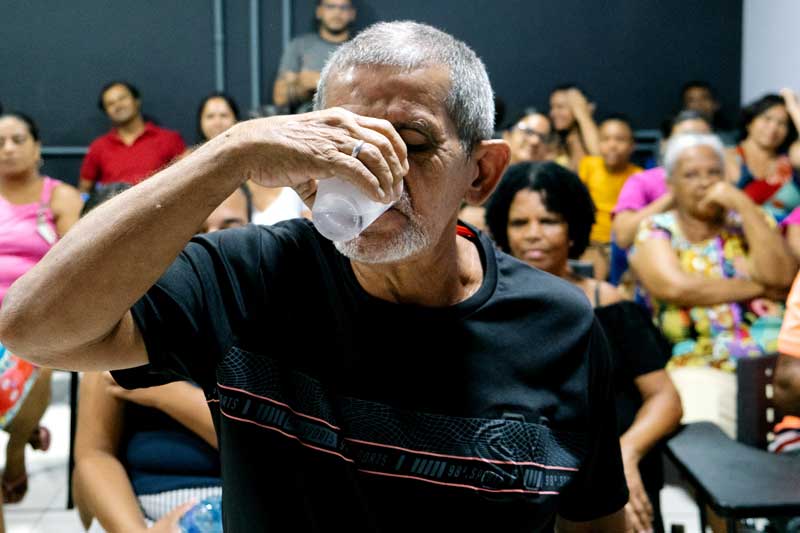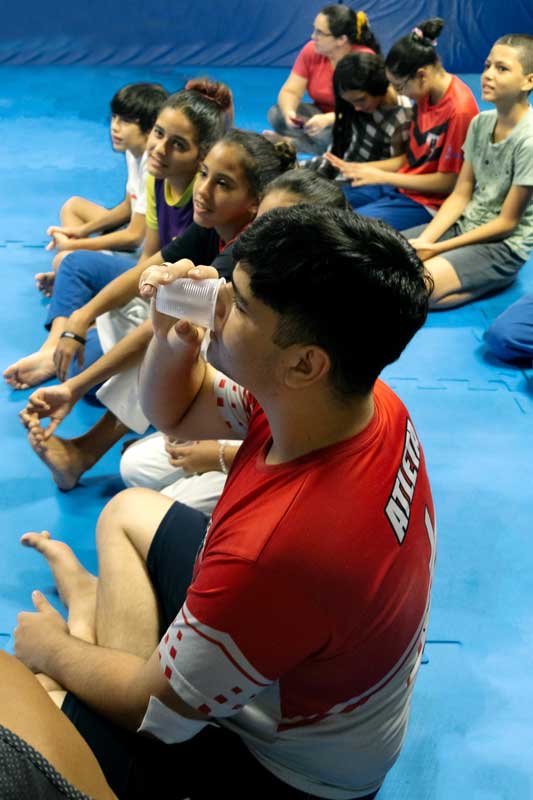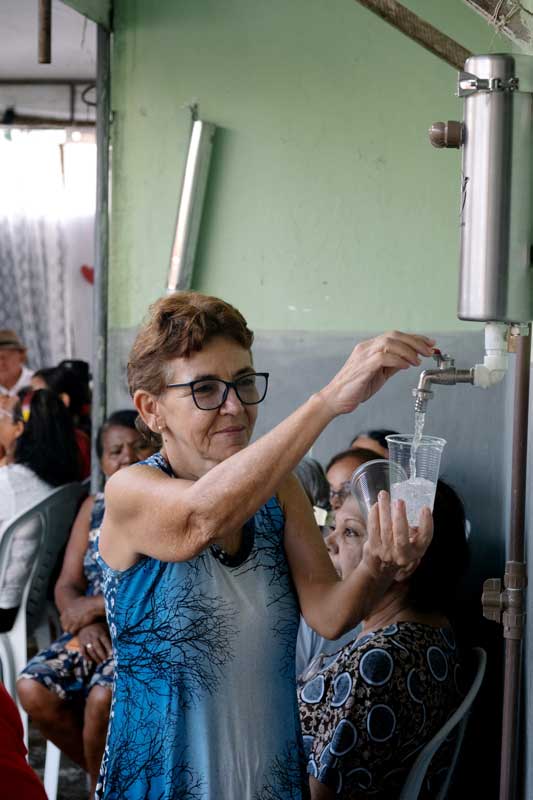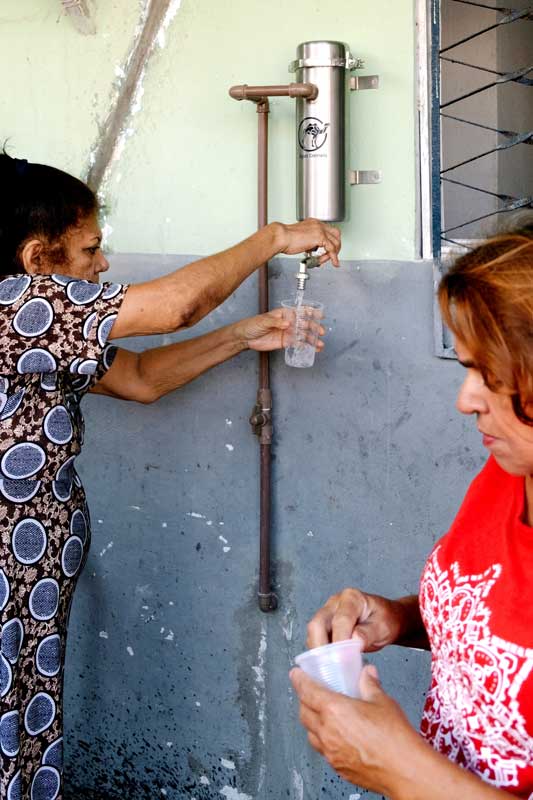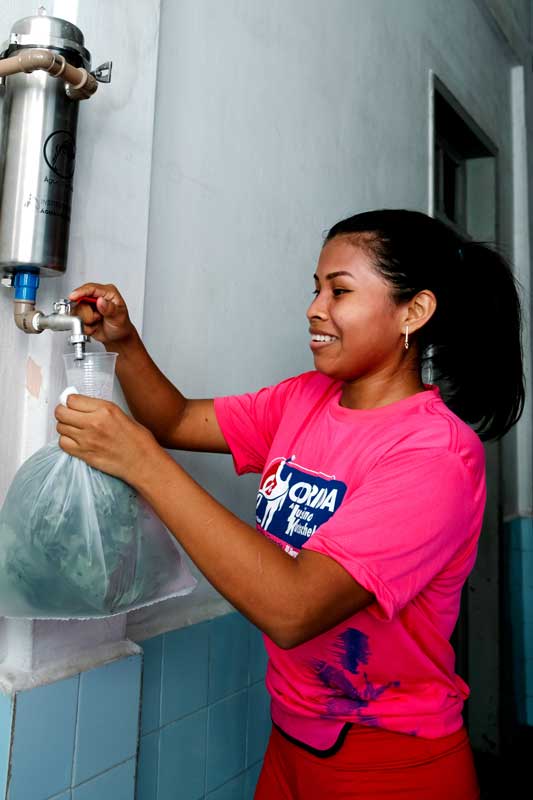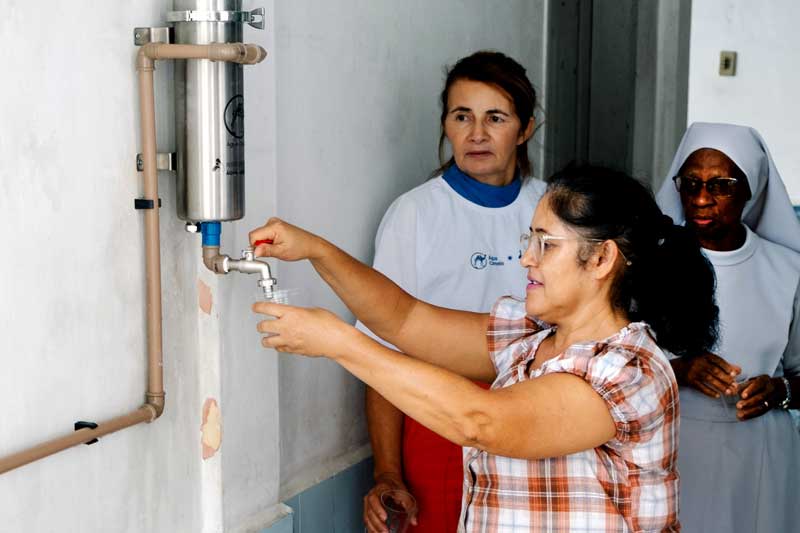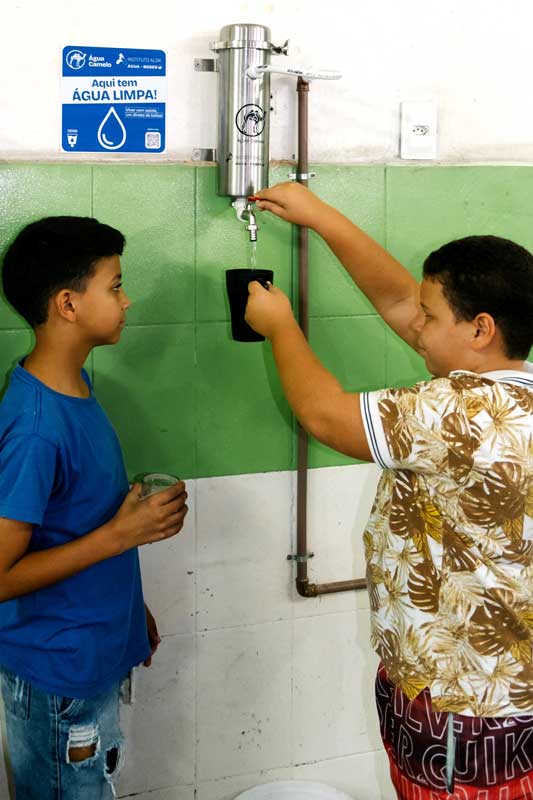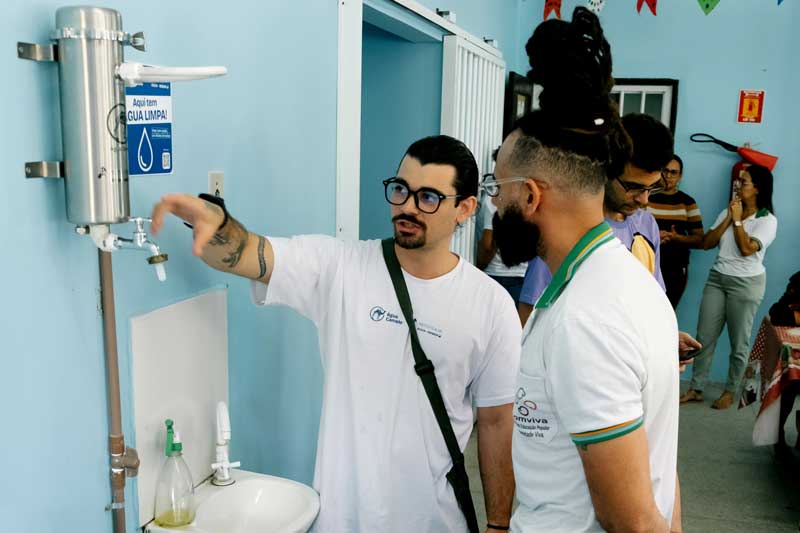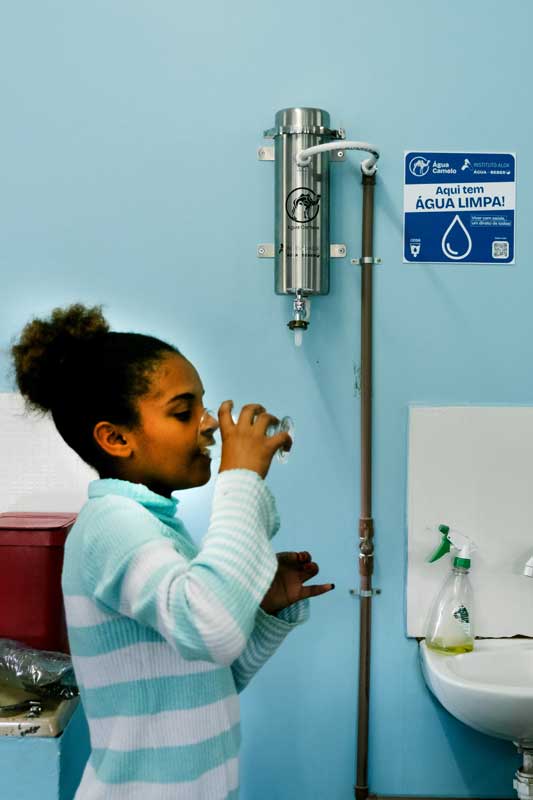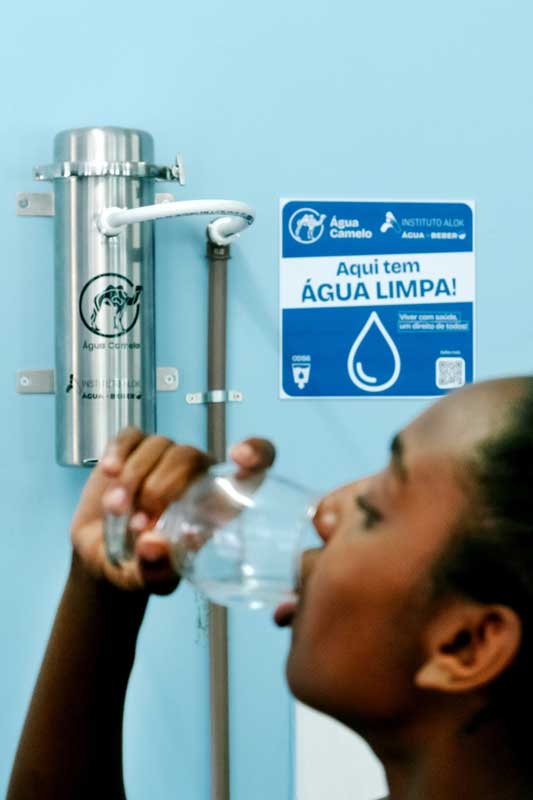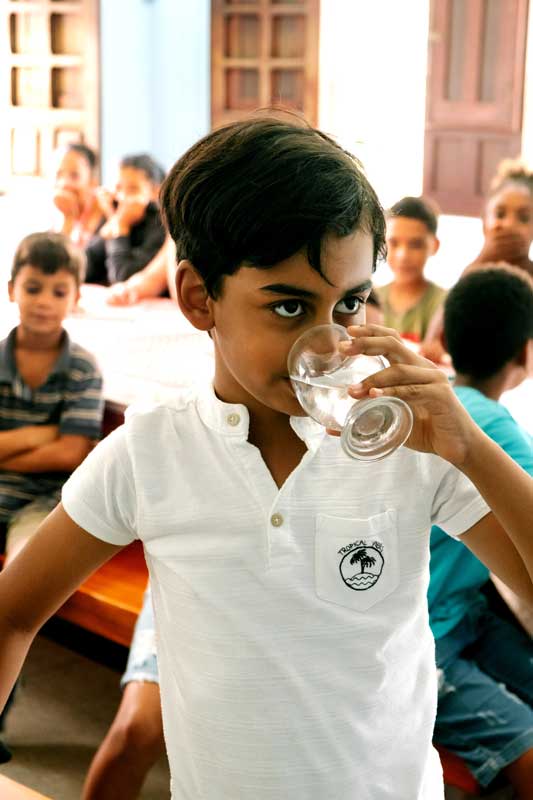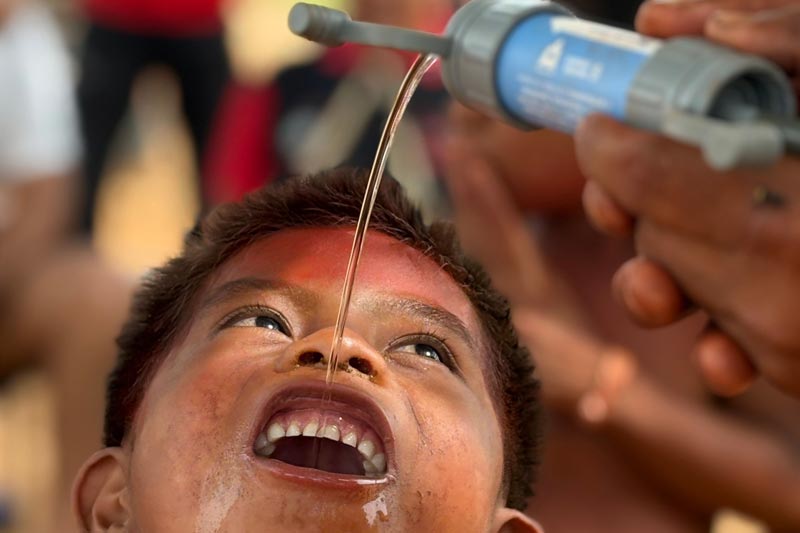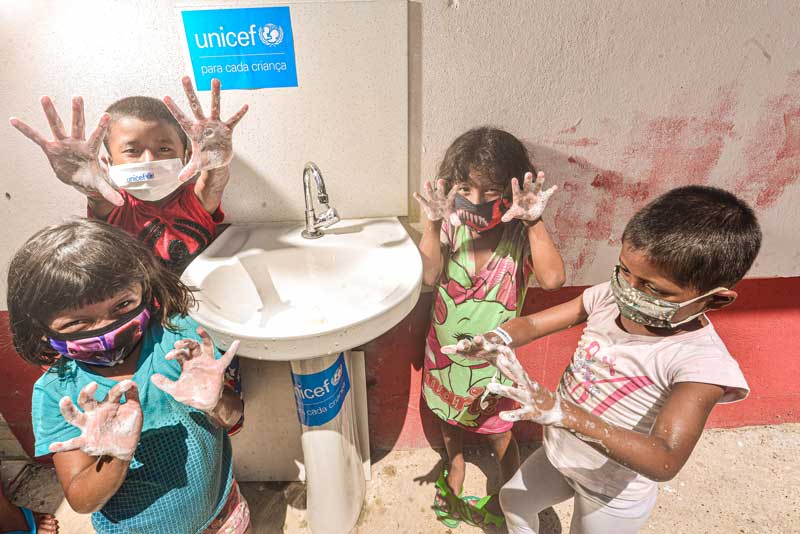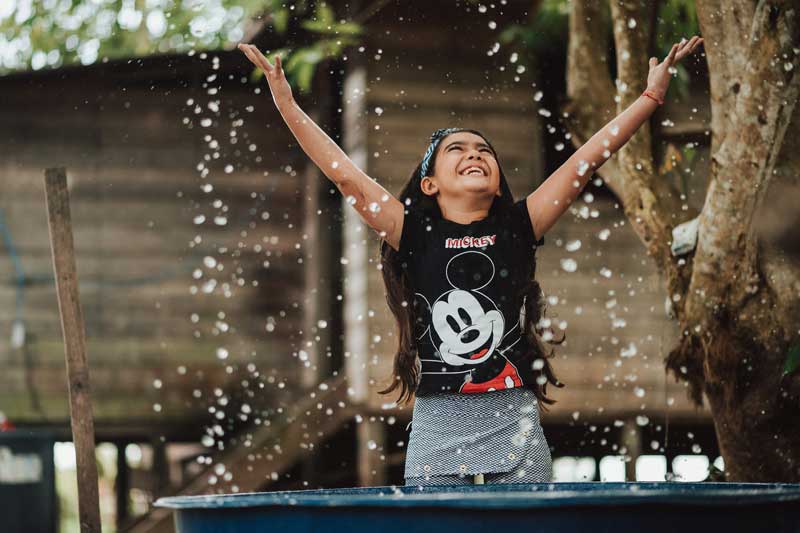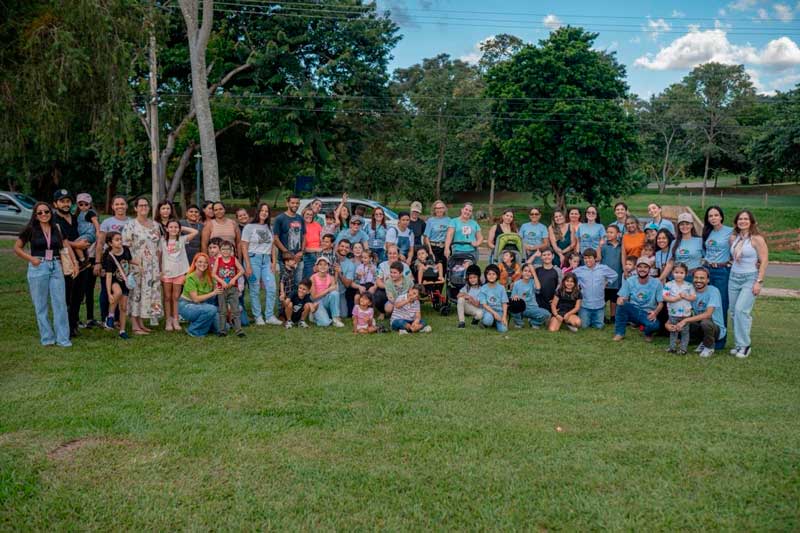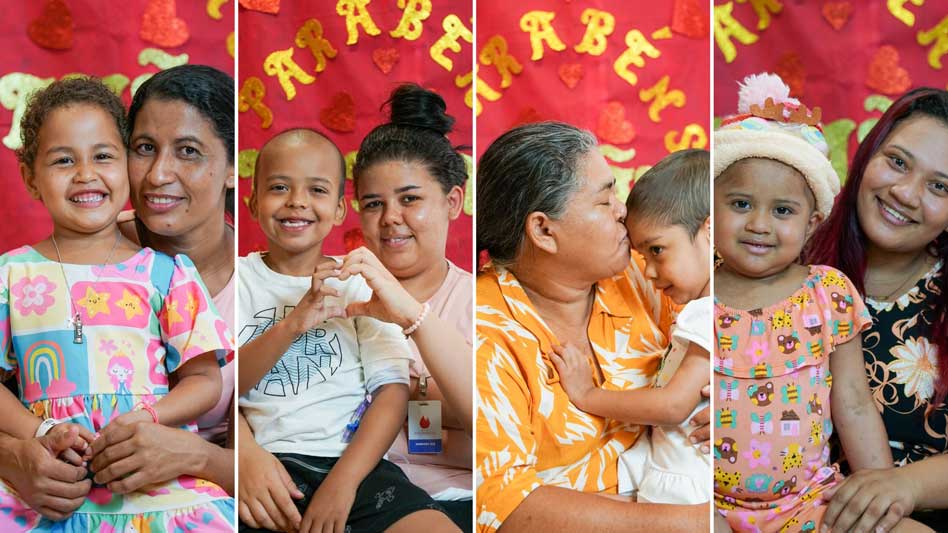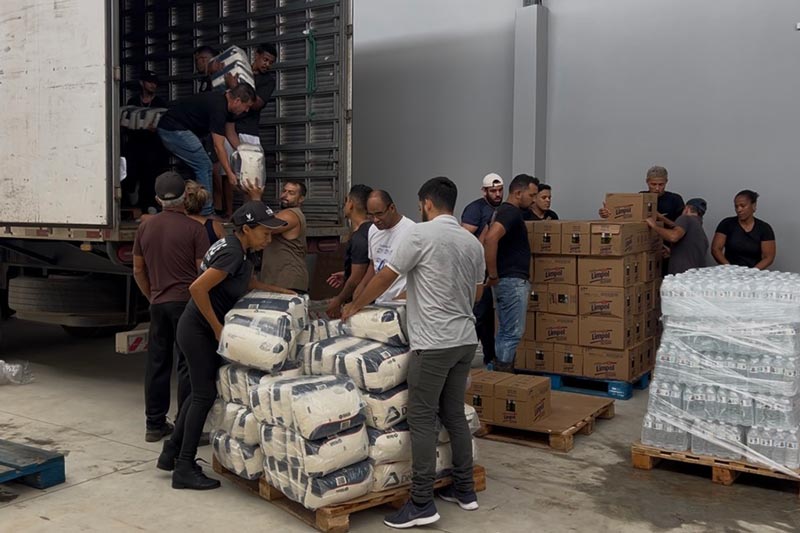
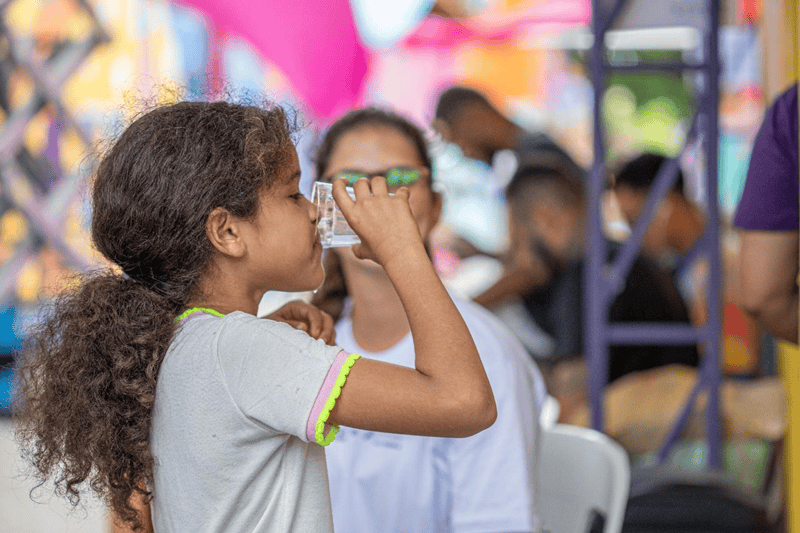
Funded with resources from Instituto Alok and support from Waaw, the first initiatives of our program contributing to access to clean water were carried out on two fronts, through partnerships with UNICEF and the startup Água Camelo, benefiting more than 20,000 people in 23 cities in the Northeast and 13 indigenous communities in southern Bahia.
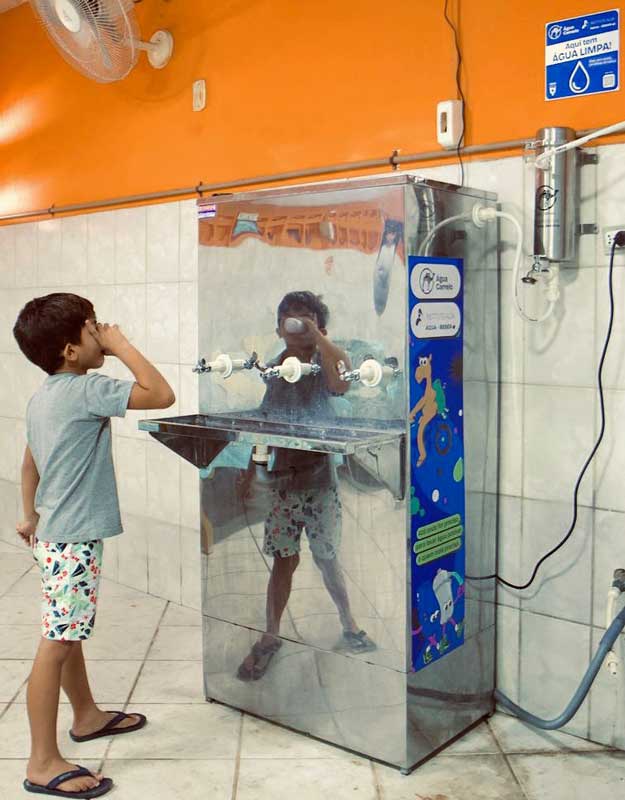
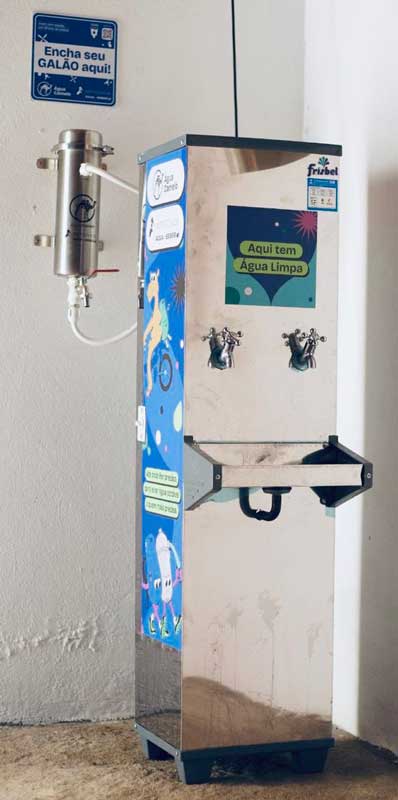
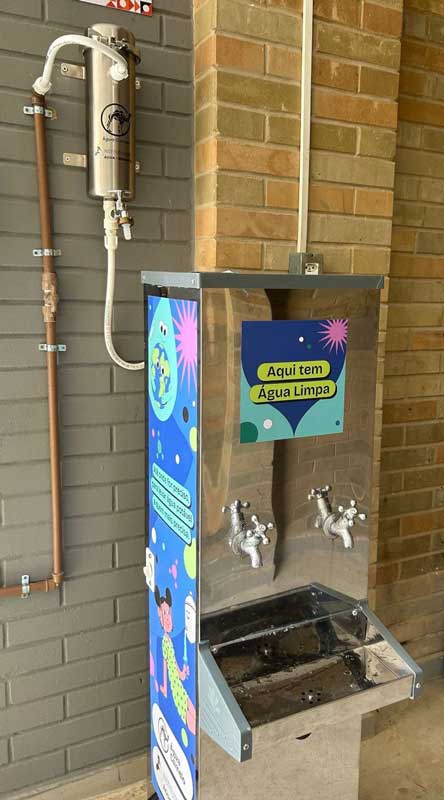
In the first cycle (2024–2025), the partnership with startup Água Camelo enabled access to treated, drinkable water through the installation of 20 community access points in 13 cities across six states (Pernambuco, Alagoas, Rio Grande do Norte, Paraíba, Piauí, and Ceará), using innovative water treatment, collection, and refrigeration systems.
The first locations, strategically chosen at institutions that serve people in social vulnerability and underserved communities with a lack of clean water, are:
In Paraíba, the project initially reached 2 cities: João Pessoa and Campina Grande, where three community water access points were installed at the following institutions:
- In João Pessoa: Instituto Cultural e Esportivo Força Jovem Bushido, in the Gramame neighborhood, focused on sports for children and youth; and Associação Beneficente Caminho da Esperança, in the Planalto Boa Esperança neighborhood, which runs cultural activities for children and elderly people.
- In Campina Grande: Casa da Criança Dr. João Moura, in the São José neighborhood, which shelters children with a history of family abandonment.
In Ceará, the partnership reached 6 cities: Fortaleza, Maracanaú, Forquilha, Beberibe, Aracati, and Eusébio:
- Fortaleza: Instituto Pensando o Bem, promoting education for children and youth.
- Maracanaú: Instituto Asas e Raízes Pitaguary, serving the Pitaguary indigenous people; and Quintal da Maroka, which provides political education for residents.
- Forquilha: Associação Comunitária de Forquilha Acolha, working in education; and Associação Comunitária Capitão José Diogo de Siqueira, offering basic assistance.
- Aracati: Recicriança, promoting sports.
- Beberibe: Associação Comunitária de Beberibe, providing social support for vulnerable families.
- Eusébio: Associação Comunitária dos Moradores da Pedra Raio de Sol, focused on learning for children; and Instituto Tecnológico e Vocacional Avançado (ITEVA), working in scientific production.
In Alagoas, the community water access point was installed in:
- Maceió: Instituto MANDAVER, operating in the Vergel do Lago neighborhood, promoting citizenship and social transformation through income generation, professional training, culture, sports, women’s empowerment, and sustainability.
In Pernambuco:
- Petrolina: Casa de Apoio à Criança Tribo de Gade, in Jardim Petrópolis, sheltering children in social vulnerability and risk.
- Caruaru: Centro de Educação Popular Comunidade Viva (COMVIVA), working in the Cedro and Kennedy neighborhoods.
In Rio Grande do Norte:
- Mossoró: APAE (Association of Parents and Friends of the Exceptional), in the Abolição 2 neighborhood, serving people with disabilities (PwD) and supporting their families.
In Piauí:
- Parnaíba: Two community water access points were installed at Instituto Projeto Amar de Parnaíba, which transforms the lives of communities and people in street situations through social welcoming and assistance actions in the São Francisco and Bom Princípio do Piauí neighborhoods.
The work with partner organizations in these cities currently serves approximately 13,000 people.
“Networking is essential to fight this great battle, where 35 million people in Brazil alone wake up every day without a glass of clean water to drink at home. That is why it is essential to always build projects with many hands — with partner institutions, community leaders, and organizations with local knowledge and the trust of the people, so that we always achieve the best and greatest impact possible. It is a great honor to bring to life this partnership with Instituto Alok, an organization we admire and had long envisioned working with. Beyond that, we believe this is an example of how Alok, its founder, uses his enormous visibility to make a difference in such important causes, through his commitment to essential issues and his seriousness and dedication to genuine impact.” — João Piedrafita, Co-founder, Água Camelo.
Instituto Alok is also supported by WAAW – audio equipment.
The Second Cycle (2025/2026/2027) of the partnership with Água Camelo is part of the Team Water Campaign, conceived by MrBeast and Mark Rober, from WaterAid, and led in Brazil by Instituto Alok. In this cycle, the project installs 20 Safe Water Stations (EAS) in urban, rural, and quilombola communities in six northeastern Brazilian states. With continuous monitoring over three years, the initiative reaches between 13,000 and 17,000 people. In addition to guaranteeing access to treated water, the partnership seeks to strengthen local leadership and support the conscious use of water resources.
About Água Camelo
A social and environmental impact startup focused on the ESG market, Água Camelo works with clean water access projects for organizations that wish to promote access to a safe source of treated water for people in social vulnerability — in urban centers, the semi-arid region, and the Amazon rainforest.
To change the scenario of lack of access to treated water, the startup incorporates simple and accessible technologies that enable quality water consumption for populations without access to this basic public service.
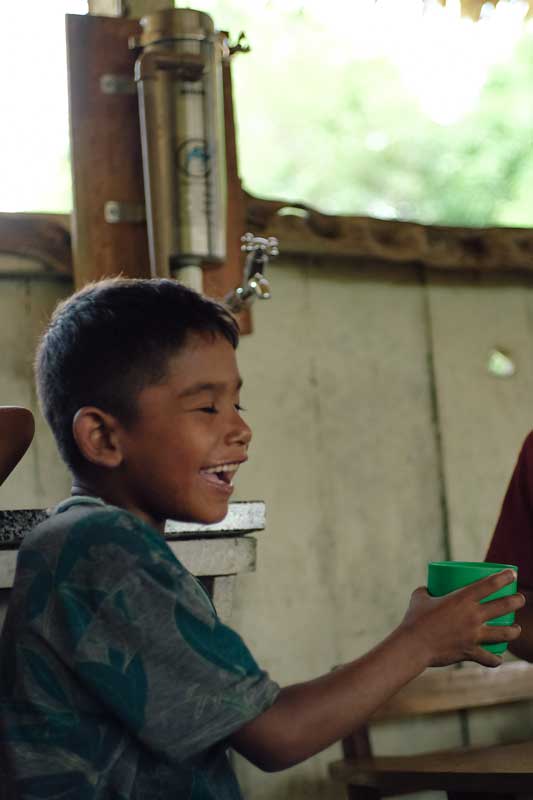
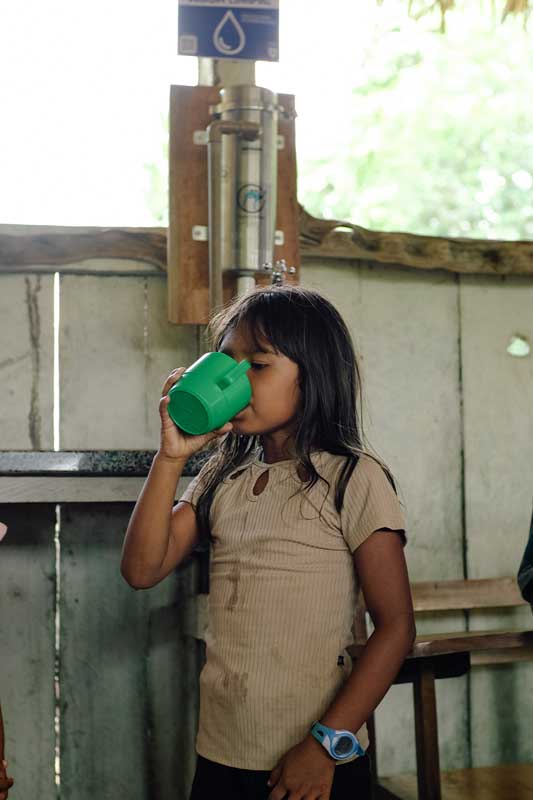
Through water filtration and distribution technology, Camelo uses filtering equipment designed for community use, capable of handling a high volume of raw water (24,000 liters/day) for treatment, making it suitable for consumption, personal hygiene, or food cleaning. This equipment features a hollow fiber membrane made of PVDF (polyvinylidene fluoride), a material with high chemical stability, oxidation resistance, and resistance to acids and alkalis.